
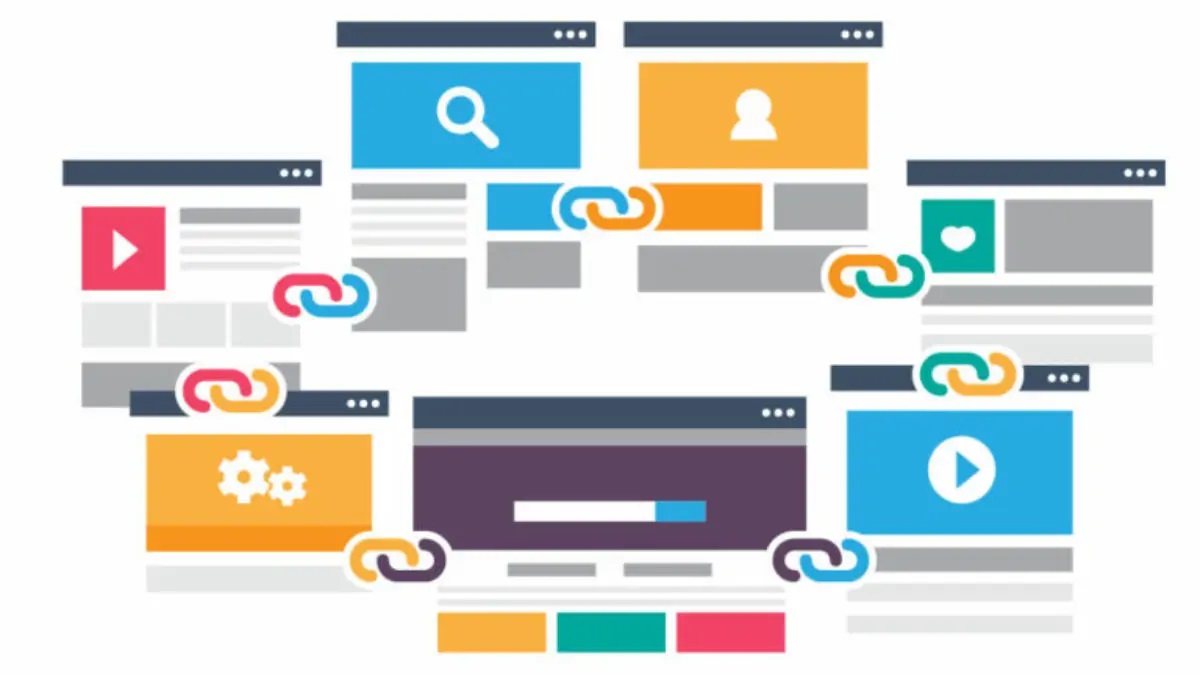
As someone who has been doing SEO since 2004, I can say that content is still king and so are backlinks. It just makes sense that the best ranking websites are always going to be high quality sites with the most high quality links pointing to them.
On-Page vs Off-Page SEO
What is On-page? its all the things you can do to the website itself it help it rank. Page speed, clean code, content, meta data, crawlability, site structure and most importantly AI intelligibility.
What is Off-page? It refers to link building, citations, social media etc. All the things you can do off the website to help it rank.
Which is more important? On and Off-page are both equally important but carry a different workload. Please allow me to elaborate…
I’m not belittling On-page, it is SUPER important but once your website is fully optimized with all the bells and whistles, there’s not much more you can do other than refresh and add new content here and there. This is a simple task that doesn’t take much work from you or your SEO team.
This means, the bulk of the work that your SEO team should be performing (after the website is fully optimized) is Off-Page SEO. But exactly what is Off-page SEO in 2026???
#1 How to Quality Backlinks!?!?
Get high quality backlinks. This has been and probably always will be the most important factor of SEO. The higher the quality and the more, the better!
- Organic- Get people to link to you naturally because you are a true resource, a pioneer in your industry or a partner.
- Content collaboration- Write and distribute unique and high quality content.
- Paid- Offer money for sponsored posts, ads and backlinks.
- Directories- Try to avoid spammy directories that are just link farms but there’s still hundreds of good directories you should attain.
Citations & Social Media Signals
Get people talking about you online. Create a unified handle across different platforms. Here’s just a few places you can focus…
- FB Page
- IG
- Tiktok
- Google Maps
- YouTube
BlackHat Backlinks
As I said way back in 2012 with my article about the disavow link tool, there’s no such as a bad link. If I could simply build spammy backlinks to sabotage my competitors and knock them out of the rankings, that would undermine the entire Google search engine.
If building spammy backlinks to you competitors won’t hurt them it won’t hurt you either!
There’s lots of blackhat tools and legal hacking techniques where you can score thousands of low quality, spammy backlinks for such a low cost so why not do it, as long as you’re smart enough not to let it trace directly back to you.
In conclusion, you can get thousands of backlinks for pennies so I say throw shit at the wall and see what sticks! Just don’t pay much or exert much recourses on it.
Public Relations & Press Releases
Another relic from the old days of SEO that still works when done right. Press releases and mentions in media are still very valuable because they build strong links and/or strong citations. I’ll spend thousands of dollars on a single press release campaign if it’s done right.
Local Business SEO
Local SEO is still a thing however, don’t expect results outside of the geographical areas that you target. It can sometimes jeopardize your site if you are trying to reach global audiences at the same time. It can be very difficult and convoluted to try to target local geographical areas while at the same time trying to rank globally unless your business has actual locations in each of the areas you are trying to target.
Brand Management
This does not fall under the SEO department but ultimately, just focusing on building a brand instead of an online persona can lead to brand recognition and therefore organic traffic that drives your CTR ratio on the SERPs. Having built a name for yourself will also contribute to your SEO. Produce promotional products and get your name out there using the old fashion channels of cards, direct mail, merchandise, print advertisement, going to conferences etc. Google actually recognizes and awards companies when they are searched for directly by name.
On-Page SEO vs Conversion Science
You may notice that most SEOs are not graphic artist, sales people, nor the person to build the sales funnel or squeeze page. While they may be familiar with it, they may not always be experts at it.
Many times, the SEO’s job is to bring the targeted traffic and it’s up to others to convert it. In many cases of my career, a “conversion scientist” was called in to design the page and direct the users to a contact form, signing up or checking out. They would analyze where the traffic was coming from, doing A/B testing and other experiments to design the page and the CTAs (call to action) accordingly.
A conversion scientist might not know anything about SEO and driving traffic but they know how to get that page to convert. Especially, the online sales and affiliate marketing types who you always meet at conferences. SEOs often work with conversion scientist. Especially, when using heat-maps but the skills are rarely performed by the same person.
AI Rewrite Version
I asked ChatGPT to rewrite this article. I still think I did a better job in less the words but here it is…
SEO in 2026: What Actually Changed (And What Didn’t)
After more than 20 years working in search, and having direct conversations with early Google engineers, I’ve seen multiple “SEO revolutions.”
Most of them were overstated.
2026 is no different.
SEO hasn’t fundamentally changed. What’s changed is how obvious the truth has become.
What is SEO in 2026?
SEO in 2026 is the process of creating content that search engines and AI systems trust enough to:
- rank
- summarize
- and cite as a reliable answer
That last part; being cited by AI, is the biggest shift.
But it doesn’t come from anything new. It comes from doing the fundamentals better than everyone else.
What actually changed
Let’s separate signal from noise…
1. AI didn’t replace SEO, it exposed weak content
AI can now generate endless “optimized” articles.
Which means:
- Generic content is worthless
- Surface-level advice is ignored
- Rewritten ideas don’t compete
What survives?
Content that reflects real experience.
2. Rankings are no longer just links, they’re trust
Google has been moving this direction for years. Now it’s unavoidable. Search systems evaluate:
- who you are
- what you consistently publish
- whether others reference you
- how well your content satisfies intent
In other words:
You’re not ranking pages anymore. You’re building a trusted entity.
3. Visibility now includes AI answers
Search traffic isn’t just “10 blue links” anymore. Your content can now:
- rank in search results
- appear in featured snippets
- be summarized by AI systems
- be quoted directly in answers
If your content isn’t structured clearly:
 it won’t be used
What hasn’t changed (this is the part people miss)
Despite all the noise, the fundamentals are exactly the same.
1. Content still has to be useful
- Not “optimized.”
- Not “long-form.”
- Actually useful.
- That means:
- answering real questions
- solving real problems
- providing clarity, not filler
2. Sites still need to be technically sound
You still need:
- clean structure
- fast load times
- proper indexing
- logical internal linking
None of this is new.
It’s just no longer optional.
3. Intent still drives everything
Google’s goal hasn’t changed:
Match the best answer to the user’s intent.
If your content doesn’t align with that:
Nothing else matters.
What most people still misunderstand
This hasn’t changed since the early days—and I saw this firsthand. When I was actively engaging with Google engineers and keynote speaking, one thing was clear:
Google was never trying to rank “optimized pages.”
It was trying to rank credible sources.
That’s it. Everything else—keywords, links, structure—are just signals toward that goal.
What works now (and always has)
If you strip everything down, SEO success in 2026 comes from three things:
1. Demonstrated experience
- Write what you actually know.
- Not what you researched.
- Not what AI generated.
- What you’ve lived.
2. Clear, structured communication
Your content needs to be:
- easy to scan
- easy to understand
- easy to extract
- Because now you’re writing for:
- humans
- search engines
- and AI systems
3. Consistent topical depth
One article won’t build authority. You need:
- multiple pieces
- on closely related topics
- that reinforce each other
That’s how search systems recognize expertise.
The real shift: from pages to people
The biggest change isn’t technical.
It’s conceptual.
SEO is no longer about ranking pages. It’s about becoming a source worth ranking.
That means:
- your name matters
- your consistency matters
- your perspective matters
- And most importantly:
- your experience matters
Final thoughts
If you’ve been around SEO long enough, this moment feels familiar. Because we’ve been here before. Every few years:
- new tools emerge
- new tactics trend
- new “strategies” take over
But the fundamentals always win.
2026 didn’t change SEO. It removed the shortcuts.
Simple takeaway
If you want to succeed in SEO today:
- Say something real
- Structure it clearly
- Build on it consistently
Do that and you won’t just rank. You’ll be referenced.
Leave a Reply